
The Best Art for a Home Office: How to Choose Pieces That Work as Hard as You Do
Your home office is where focus lives. It is where you sit down, close the door, and do the work that defines your professional life. And yet, most home offices are an afterthought in design a desk, a chair, a monitor, and maybe a plant. The walls stay bare, or worse, they collect whatever was left over from other rooms.
Art changes that. The right piece on the wall behind your desk or across from your line of sight can sharpen your focus, elevate your mood, and communicate professionalism in every video call without saying a word. At Haus of Collectors, we work with professionals, designers, and architects who understand that a workspace's visual environment directly affects the quality of the work produced there.
This guide covers how to choose art for a home office: what works, what to avoid, and how to create a space that reflects the standard you bring to your work. We will walk through the practical considerations of style, scale, color, and placement, and then connect those choices to the experience of working in a space that feels genuinely designed rather than merely furnished.
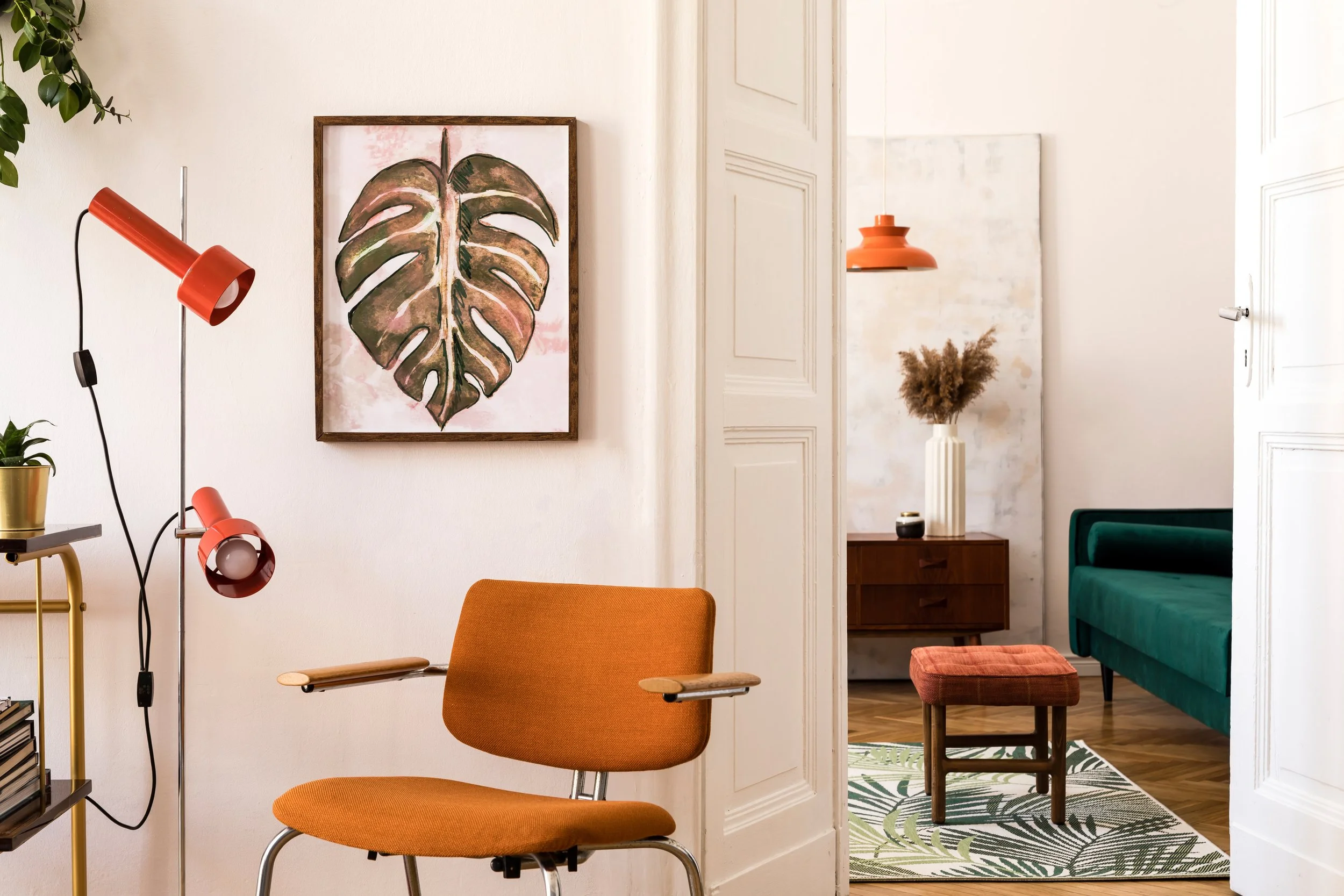
Why Art Belongs in a Workspace
The case for art in a home office goes beyond aesthetics. Research on workplace environments consistently shows that visual richness, whether in the form of art, natural elements, or considered design, improves concentration, reduces stress, and supports creative thinking. A blank wall offers nothing for the mind to rest on. A well-chosen print offers a visual focal point that recharges attention during the natural pauses of a workday.
There is also the practical reality of remote work. Your home office is visible on camera. It serves as the backdrop for client calls, team meetings, and presentations. The space behind you communicates taste, intention, and professionalism before you begin speaking. Art, chosen well, does that work quietly and effectively.
The distinction between decorating an office and curating one is significant. Decoration fills a wall. Curation selects pieces that serve the space, the work, and the person. A curated home office feels intentional, and that intention carries over into the energy of the work you produce there.
What to Look For: Key Qualities in Office Art
Not every piece of art works in a professional setting. The qualities that make a print ideal for a living room or bedroom may not translate to a space built for focus and output. Here is what to prioritize:
Visual calm without monotony: The best office art is engaging enough to provide mental refreshment but not so complex or stimulating that it pulls attention away from the work. Abstract compositions with balanced color, minimalist studies, and monochromatic photography are strong starting points.
Intentional color: Color influences mood and energy. Cool tones (blues, greens, grays) promote calm and concentration. Warm neutrals (taupes, soft golds, cream) add warmth without distraction. Avoid highly saturated or clashing color combinations in a workspace. They can create visual fatigue over long hours.
Appropriate scale: A home office typically has limited wall space. One medium-to-large print (24x36 or 36x48) often has a greater impact than several small pieces. If you prefer a grouping, a simple diptych or a tight three-piece grid keeps the composition controlled.
Quality that communicates: In a professional context, art quality is noticed. A museum-quality print on archival paper in a considered frame signals attention to detail. A poster in a clip frame signals the opposite. The investment does not need to be enormous, but the standard should be visible.
Subject matter that supports, not distracts: Art with overly narrative or text-heavy content can become a conversation piece in the wrong way during a meeting. Choose imagery that invites a glance, not a long interpretation. The viewer should register quality and taste, not spend the call deciphering what is on the wall behind you.
Choosing by Space and Setup
Where you place the art relative to your desk and camera matters more in a home office than in any other room.
Behind the Desk (Camera-Facing Wall)
This is the most visible wall in any home office. It is your video call backdrop and what visitors see first if the office has a doorway. Prioritize either a single strong piece or a clean, symmetrical arrangement. Avoid anything too personal, humorous, or distracting. A single limited edition print in a simple frame is often the most effective choice.
Facing the Desk
This is the wall you look at most during the day. It is your mental reset point. Choose something that gives you a moment of visual pleasure without pulling you into a long, detailed examination. A calm landscape, an abstract study, or a monochromatic piece works beautifully here.
Side Walls
These are opportunities for supporting pieces: smaller prints, a narrow horizontal work, or a picture ledge that allows rotation. Side walls receive less visual attention so that they can accommodate slightly bolder or more personal choices.
If your office has a window wall, consider the light conditions carefully. Prints displayed near direct sunlight should be framed with UV-protective glass or acrylic to prevent fading. Even museum-quality pigment-based inks benefit from UV protection in high-light environments. Position the art where it receives ambient light rather than direct exposure for the best long-term results.
Art Styles That Work in a Home Office
Certain genres and styles consistently work well in professional settings. The following categories are worth exploring as starting points.
| Style | Characteristics | Best Placement |
|---|---|---|
| Abstract / Minimalist | Clean compositions with a restrained color palette. | Behind the desk or directly facing the desk. |
| Monochrome Photography | Architectural, landscape, or portrait imagery. | Behind the desk or on adjacent side walls. |
| Botanical / Nature Studies | Organic forms and calming natural tones. | Facing the desk or within reading nooks. |
| Figurative / Contemporary | Bold yet thoughtful conversation-starting pieces. | Behind the desk, used selectively. |
| Line Art / Illustration | Simple, graphic, and modern visual language. | Side walls and smaller spaces. |
The Haus of Collectors catalog features works across these categories by internationally represented artists selected through a rigorous curatorial process. The collection is designed to serve spaces where quality and intention matter.
Two to three works from the same series, arranged in a grid or a horizontal line, create a unified statement that is both visually clean and conversationally interesting. If you are aiming for a highly polished, intellectual aesthetic, we recommend that you browse black and white wall art prints to establish a unified gallery wall. It shows that you collect with intention, not at random.
Framing for a Professional Space
In a home office, the frame is part of the professional impression. Keep it clean, simple, and consistent.
Black or dark frames convey authority and work well in modern, minimal interiors.
Natural wood frames add warmth and work in spaces with mid-century or Scandinavian design elements.
White frames create a sense of lightness and pair well with bright, airy offices.
Avoid ornate, gilded, or overly decorative frames in a workspace. They can be read as distracting or out of place in a professional environment.
For a complete guide to frame selection, including matting, glass options, and archival protection, our framing guide provides step-by-step advice.
If you are framing multiple pieces for a grid or diptych arrangement, order all frames from the same source at once. Even subtle differences in finish or profile between batches can be noticeable when frames hang side by side. Consistency in framing is especially critical in a professional space where precision communicates competence.
Common Mistakes to Avoid
Even with good intentions, a few common errors can undermine the effect of art in a home office.
Hanging art too high. The center of the piece should be at eye level when seated, not standing. In an office, you are seated most of the time.
Choosing art that is too busy. If the print demands attention every time you glance at it, it is competing with your work. The best office art rewards a long look but does not demand one.
Ignoring the camera angle. Before hanging anything on the wall behind your desk, open your laptop camera and check what falls within the frame. Adjust placement so the art is visible and centered in the background.
Using low-quality reproductions. A faded poster or a poorly printed canvas is immediately noticeable on camera and in person. If art is in the room, it should meet a standard that reflects well on you.
Investing in a Space That Works for You
A home office is not a temporary setup. For millions of professionals, it is a permanent workspace. It deserves the same design consideration as any other important room in the house. Art is not a luxury add-on to that space. It is a functional element that shapes your experience of the workday, every day.
A single museum-quality print, in the right frame and hung in the right spot, can transform a forgettable room into a space that supports your best work and communicates your values to everyone who sees it. If you want to introduce an organic, calming influence into a high-stress environment, take the time to browse organic form wall art prints for a touch of serenity.
Think of it this way: you chose your desk for how it functions. You chose your chair for how it supports you. The art on your walls should be chosen with the same deliberate intention, for how it makes you feel during the hours you spend in that room. When every element in the space is working toward the same standard, the room elevates everything that happens in it.
Explore the full collection at Haus of Collectors to find art that meets the standard your workspace deserves. Your Haus, your collection.
FAQs
-
Opt for pieces that engage the mind without overwhelming it. Neutral color palettes, structured abstract works, and calming architectural photography are excellent choices. They provide a mental reset during the workday without demanding intense cognitive focus.
-
Scale depends on your available wall space, but a single oversized statement piece generally commands a room better than a cluttered wall of small frames. A large, cohesive print projects confidence and keeps the room's aesthetic clean and orderly.
-
Your primary piece should be mounted on the wall, directly visible on your webcam, positioned at your seated eye level. Secondly, more relaxing pieces should be placed on the wall directly facing your desk to give your eyes a place to rest off-screen.
-
Yes. Curating your visual environment reduces cognitive fatigue. A strategically placed, museum-grade print prevents your workspace from feeling sterile, offering a point of visual relief that can actually help sustain your concentration over long hours.
-
Minimalist profiles project the most authority. Crisp matte black, bright white, or sleek natural oak frames ensure the artwork remains the focal point while seamlessly blending into a structured, professional backdrop.
